Course Form: Why Some Horses Run Better at Certain Tracks
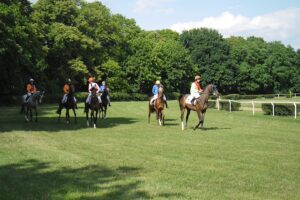 Every horse racing fan has noticed a recurring pattern where a specific runner seems to transform when they step onto a particular track. You might see a horse struggle in mid-week races at flat, galloping circuits, only to look like a world-beater when returning to a familiar venue. This isn’t a coincidence. In the world of racing, the diversity of tracks means that horses for courses is much more than just a common terrace phrase.
Learning to spot and evaluate these nuances will help you appreciate the physical and mental demands placed on these athletes. Whether it’s the tight turns of a sharp track or the punishing climb of a steep finish, the environment plays a massive role in determining the outcome of a race. Carry on reading to find out how different track characteristics influence performance.
The Impact of Track Layout and Direction
One of the first things to check on a racecard is whether a track is left-handed or right-handed. Just like humans, many horses have a lead leg they prefer to use when galloping at high speeds. A horse that naturally shifts its weight to the left might lose momentum or hang outward when asked to navigate the tight, right-handed turns at a track like Ascot.
The shape of the circuit also dictates the style of racing. Some tracks are sharp, meaning they have short straights and tight bends that suit agile horses with a high cruising speed. Others are galloping tracks, such as Newbury, which feature long, fair straights where a horse can fully extend its stride. If a long-striding horse is forced to run on a sharp track, they often can’t get into a rhythm before they have to turn again.
Gradients and the Famous Undulations
British racecourses are renowned for their unique geography. Unlike the perfectly flat dirt tracks often found in other countries, UK turf courses are frequently built on natural terrain. This means runners must contend with significant rises and falls in the ground. For example, the climb toward the finish line at certain venues tests a horse’s stamina and lung capacity to the absolute limit.
These uphill finishes are a big reason why course form carries so much weight when bettors in the UK are sizing up the market ahead of major meetings. Before the season’s biggest festivals, fans often look for offers and opportunities on the market, like the Cheltenham betting offers, to back proven hill climbers who have shown they can handle a gruelling uphill finish. A horse might be the fastest in the field on a flat surface, but if they don’t have the grit to find an extra gear when the ground rises, they’ll often be caught by a more stayed opponent in the final yards.
Ground Conditions and Turf Quality
The going is perhaps the most discussed variable in racing. While most people focus on whether the ground is Good or Heavy, the actual composition of the soil matters too. Some tracks sit on chalky downland that drains incredibly quickly, while others are situated on heavy clay that becomes a bog after a bit of autumn rain.
A horse’s physical build often determines which surface they prefer:
- Smaller, light-framed horses often skip across top-of-the-ground, fast turf.
- Large, powerful horses with a daisy-cutter action often need softer ground to cushion their joints.
- Specialist mudders have a high-stepping action that allows them to pull their hooves out of deep, sticky ground without tiring.
The Psychological Element of Familiarity
It’s not all about physics, there’s a mental aspect to course form as well. Horses are creatures of habit. Some runners become more relaxed and confident when they arrive at a parade ring they recognise or travel on a route they’ve taken before. This familiarity can lead to better pre-race manners, meaning the horse saves vital energy instead of getting worked up or sweating up before the start.
Certain tracks also have unique visual obstacles. Some venues have the crowd very close to the rail, while others have grandstands that cast long shadows across the turf. A quirky horse might be distracted by these elements at a new track but will remain focused at a venue where they’ve had previous success.
Final Remarks
Identifying a track specialist is one of the most rewarding parts of following horse racing. By looking at a horse’s historical performance at a specific venue, you can gain a much clearer picture of their potential than by looking at their recent form alone. While a horse’s raw ability is important, it’s the interaction between the athlete and the environment that truly defines a champion.
 With the four-day racing spectacular now underway at the iconic Cheltenham Racecourse, thousands of fans will be keeping an eye out not only for the runners and riders but also for the famous faces in the stands.
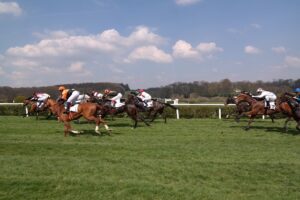 The 2026 Cheltenham Festival is undoubtedly one the highlights of the annual sporting calendar in the United Kingdom.