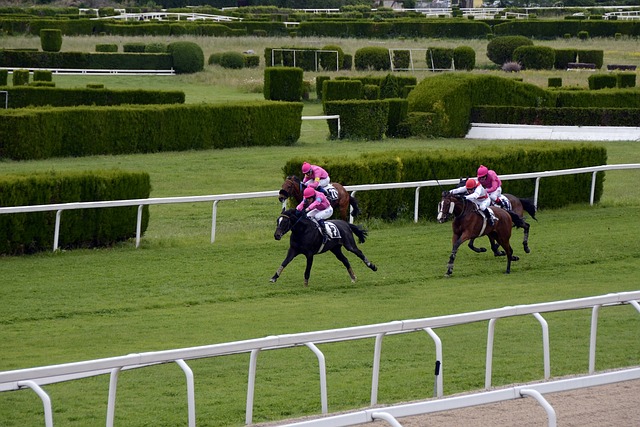
Why Horses Are Meant to Race: Understanding the Natural Athleticism of Equines

Horses have been part of human history for thousands of years, serving as companions, work animals, and athletes. Among their many roles, racing has emerged as one of the most celebrated and exciting aspects of equine life. From the thunder of hooves across racetracks to the thrill of competitive events worldwide, horse racing showcases the natural abilities, instincts, and physical design that make these animals extraordinary athletes. But why are horses so well-suited to race? On the other hand, if you want to try colorful world of GameZone Arcade, visit the platform today!

In this article, we explore the biological, evolutionary, and behavioral reasons behind horses’ racing capabilities.

The Anatomy of a Racing Horse

One of the primary reasons horses are meant to race lies in their anatomy. Horses are built for speed and endurance. Their long, muscular legs provide powerful propulsion, allowing them to cover ground quickly. The structure of their legs, including strong tendons and ligaments, enables efficient energy transfer from muscles to hooves, reducing fatigue over long distances.

Horses’ hooves also play a crucial role in racing. They act as natural shock absorbers, protecting the legs from impact while providing traction on various surfaces. Combined with their lightweight skeleton and strong cardiovascular system, horses are optimized for sustained running at high speeds.

Additionally, horses have a unique respiratory system that supports racing. Unlike humans, horses can increase their oxygen intake dramatically during a gallop because of a synchronized movement between breathing and stride. This coordination ensures that oxygen-rich blood reaches the muscles quickly, enhancing stamina and performance during races.

Evolutionary Traits Favor Racing

Horses are descendants of wild equines that roamed open plains. Evolution favored speed as a survival mechanism. Early horses needed to escape predators, cover large distances to find food, and compete for mates. These evolutionary pressures shaped their bodies and behaviors for running long distances efficiently.

Racing, therefore, is not an artificial imposition on horses—it aligns with their natural instincts. The gallop, a four-beat running gait, is a natural mode of locomotion for horses, designed for rapid acceleration. Thoroughbred and Arabian breeds, commonly used in racing, have been selectively bred for speed and agility over centuries, enhancing these innate abilities even further.

Behavioral Tendencies and Competitive Spirit

Horses are social animals with distinct behavioral traits that make them suited for racing. Herd animals in the wild often engage in play running, establishing dominance and hierarchy through speed and stamina. This instinctual drive translates well into competitive environments like racetracks.

Many horses exhibit a natural enthusiasm for movement, often galloping freely when given space. This eagerness to run, coupled with their trainable nature, makes them receptive to racing training. Horses also develop a competitive edge when in groups, responding to cues from other horses in the race. This social instinct allows them to push their limits during competitions.

Breeds Designed for Racing

Certain horse breeds are particularly suited for racing. Thoroughbreds are the most recognized, known for their speed, stamina, and agility. Their lean bodies, long legs, and deep chests allow for maximum lung capacity and cardiovascular efficiency, perfect for long-distance races.

Arabians, on the other hand, excel in endurance races due to their compact but muscular build, strong legs, and remarkable resilience. Quarter Horses are celebrated for sprinting over short distances, displaying explosive acceleration and quick reflexes. Each breed demonstrates how natural selection and selective breeding have reinforced horses’ aptitude for different types of racing.

The Role of Training and Human Partnership

While horses are naturally athletic, training hones their racing abilities. A structured regimen improves strength, speed, and endurance while ensuring safety. Experienced trainers understand a horse’s natural tendencies, temperament, and physical limits, helping to develop a race-ready athlete without compromising welfare.

Moreover, the human-horse partnership enhances performance. Skilled jockeys guide horses strategically, managing pacing and positioning during races. This collaboration respects the horse’s natural instincts while applying tactical techniques to maximize competitive potential. When done ethically, training and racing tap into the horse’s inherent abilities and instincts rather than forcing unnatural behaviors.

Racing as an Expression of Natural Ability

Horse racing is more than a sport—it is a celebration of equine potential. Watching a horse sprint down a racetrack is witnessing thousands of years of evolution and natural athleticism in action. The physical power, mental focus, and instinctual drive of a racehorse illustrate why these animals are uniquely suited for this activity.

Racing also provides an outlet for energy and mental stimulation. Horses are intelligent creatures that require both physical and psychological engagement. Racing satisfies these needs, giving horses a structured activity that complements their natural behaviors.

Health and Welfare Considerations

It is important to note that ethical racing emphasizes horse welfare. Regular veterinary care, proper nutrition, and balanced training schedules ensure that horses maintain peak performance without injury or stress. Modern racing regulations and organizations prioritize health, reflecting an understanding that horses can only reach their full potential when cared for responsibly.

Racing, when done correctly, aligns with horses’ natural capabilities and instincts. It provides them with purpose, stimulation, and a safe environment to exercise their natural speed and agility. This responsible approach ensures that racing remains a positive and enriching experience for equine athletes.

Cultural and Historical Significance

Horse racing is deeply embedded in human culture. From the ancient chariot races in Rome to modern international events like the Kentucky Derby, horses have been celebrated for their speed and spirit. These traditions reflect an appreciation of the horse’s natural talents and athleticism. Racing showcases the enduring bond between humans and horses, honoring their unique abilities in a structured and exhilarating context.

By highlighting the natural aptitude of horses, racing connects us to centuries of equine history and evolution. It reinforces respect for the animal’s strength, speed, and endurance while celebrating their contribution to human society.

Conclusion

Horses are not only built for running—they are designed for it. Their anatomy, evolutionary history, behavioral instincts, and trainable nature all point to racing as a natural expression of their abilities. Ethical training, proper care, and responsible racing practices allow horses to fulfill their potential, providing a thrilling spectacle for humans and a fulfilling, stimulating life for the animals themselves.

Understanding why horses are meant to race helps us appreciate the incredible combination of biology, instinct, and partnership that defines these majestic athletes. When we watch a racehorse in motion, we witness a living testament to nature’s design, evolution, and the enduring spirit of the horse.


Jack Richards Novices’ Limited Handicap Chase

Officially registered as the Golden Miller Novices’ Limited Handicap Chase, the Jack Richards Novices’ Limited Handicap Chase is, nowadays, a Grade 2 limited handicap contest, open to novice steeplechasers aged five years and upwards and currently scheduled as the second race on the third day of the Cheltenham Festival in March. The race was established, as the Grade 2 Jewson Novices’ Chase, in 2011, before being upgraded Grade 1 status between 2014 and 2024 and becoming a handicap from 2025 onwards.

Notwithstanding considerable changes, the Jack Richards Novices’ Limited Handicap Chase is still run over an extended two-and-a-half miles on the New Course at Cheltenham. Willie Mullins is the leading trainer in the history of the race with four winners, Sir Des Champs (2012), Vautour (2015), Black Hercules (2016) and Yorkhill (2017), while his former stable jockey, Ruby Walsh, who rode the last three of that quarter, remains the leading jockey.

The change of status may have rendered any trends over the last decade moot, but the most recent winner of the Jack Richards Novices’ Limited Handicap Chase, Caldwell Potter, trained by Paul Nicholls, in 2025 was in the top three in the betting, as were the previous nine winners.

Previous experience over fences, particularly at Cheltenham, and winning form, preferably recent winning form, over the larger obstacles at, or around, two-and-a-half miles, have been prerequisites for winning the race in recent years, as has an official handicap rating of 146 or higher. However, it is worth noting that the transition to a limited handicap means that the weight range is more compressed than in a normal handicap. In 2025, for example, the 154-rated Springwell Bay carried top weight of 11st 12lb, but the 129-rated Shanbally Kid was required to run from 5lb out of the handicap, effectively off a mark of 134, under 10st 6lb, to satisy the 20lb handicap limit.

Festival Hunters’ Chase

The Festival Hunters’ Chase has been sponsored by wealth management firm St. James’s Place since 2016 and is nowadays run, for sponsorship purposes, as the St. James’s Place Festival Hunters’ Chase. The race is run over three miles and two-and-a-half furlongs on the New Course at Cheltenham, the same course and distance as the Cheltenham Gold Cup, which it immediately succeeds as the penultimate race on the fourth and final day of the Cheltenham Festival.

Unlike the Cheltenham Gold Cup, though, it is restricted exclusively to amateur jockeys. Professional jockeys did compete in 2021, but only because their amateur counterparts were prohibited from doing so by Covid-19 regulations. It is also worth noting that the total prize money for the Festival Hunters’ Chase, £50,000, is just 8% of the £625,000 available in the Cheltenham Gold Cup. No horse has ever won both races, but the 1951 winner, Halloween, finished in the first three in the Cheltenham Gold Cup four years running, in 1953, 1954, 1955 and 1956. Of course, the 1981 winner, Grittar, famously won the Grand National at Aintree in 1982 under 48-year-old amateur Dick Saunders.

A total of nine horses have won the Festival Hunters’ Chase twice, the most recent being Pacha Du Polder, trained by Paul Nicholls, who recorded back-to-back victories in 2017 and 2018. Nicholls is, in fact, jointly the leading trainer in the history of the race, having also saddled Earthmover (2004) and Sleeping Night (2005) to victory. Nicholls shares that accolade with the late Richard Barber, brother of his landlord, Paul Barber, who was responsible for Rushing Wild (1992), Fantus (1995 and 1997) and Earthmover (1998).

County Handicap Hurdle

Traditionally the ‘getting-out stakes’ of the entire Cheltenham Festival, the County Handicap Hurdle became the second race on the final day, Gold Cup Day, in 2009, but remains one of the notoriously difficult handicap races staged during the week, of which there currently a dozen. In the last 10 runnings, three favoruites, all trained by Willie Mullins, have won, but they have been supplemented by three winners at 33/1, two winners at 20/1 and two at 12/1 in that same period.

Not altogether surprisingly, Mullins is the leading trainer in the history of the County Handicap Hurdle, having saddled Thousand Stars (2010), Final Approach (2011), Wicklow Brave (2015), Arctic Fire (2017), Saint Roi (2020), State Man (2022), Absurde (2024) and Kargese (2025) for a total of eight wins altogether. Mullins’ current stable jockey, Paul Townend, who rode the last five of that octet to victory, is likewise leading jockey.

The County Handicap Hurdle is run over two miles and a furlong on the New Course at Cheltenham and is now what the British Horseracing Authority (BHA) terms a ‘Premier Handicap’, having been reclassified, along with all previous ‘Grade 3’ races, since 2023. Worth £98,370 in total prize money and with a safety limit of 26, the race is inevitably fiercely competitive.

The most notable winner in recent years was State Man, who justified favouritism in 2022 and has since won 12 times at Grade 1 level, including the Champion Hurdle at the 2024 Cheltenham Festival. The Doctor Dino gelding would almost certainly have won the Champion Hurdle again in 2025, but for falling at the final flight of hurdles when five lengths ahead of his nearest pursuer.

Brown Advisory Novices’ Chase

Described by the ‘Racing Post’ as “the novices’ equivalent of the Cheltenham Gold Cup”, the Brown Advisory Novices’ Chase is run over an extended three miles on the Old Course at Cheltenham, where it is currently scheduled as the second race on the second day of the Cheltenham Festival in March. Officially registered as the Broadway Novices’ Chase, but sponsored, since 2021, by investment firm Brown Advisory and breeding and racing operation Merriebelle Stable, the race is a Grade 1 contest, open to novice steeplechasers aged five years and upwards and currently worth £200,000 in total prize money.

The indomitable Willie Mullins – far and away the most successful trainer in the history of the Cheltenham Festival – is also the leading trainer in the history of the Brown Advisory Novices’ Chase with seven winners, namely, Florida Pearl (1998), Rule Supreme (2004), Cooldine (2009), Don Poli (2015), Monkfish (2021), Fact To File (2024) and Lecky Watson (2025). The late Pat Taaffe, who numbered Coneyburrow (1953), Solfen (1960), Grallagh Cnoc (1961), Arkle (1963), and Proud Tarquin (1970) among his 25 winners at the Cheltenham Festival, remains the leading jockey in the history of the race.

The aforementioned Arkle, of course, went on to win the Cheltenham Gold Cup, itself, in 1963, 1964 and 1965. More recently, Denman (2007), Bobs Worth (2012) and Lord Windermere (2013) all followed up in the ‘Blue Riband’ event the season after winning what is now the Brown Advisory Novices’ Chase. From a statistics perspective, punters may be interested to know that, at the time of writing, eight of the last winners were seven-year-olds and five of them were sent off favourite.

1 2 3 4 23