2026 Cheltenham Gold Cup

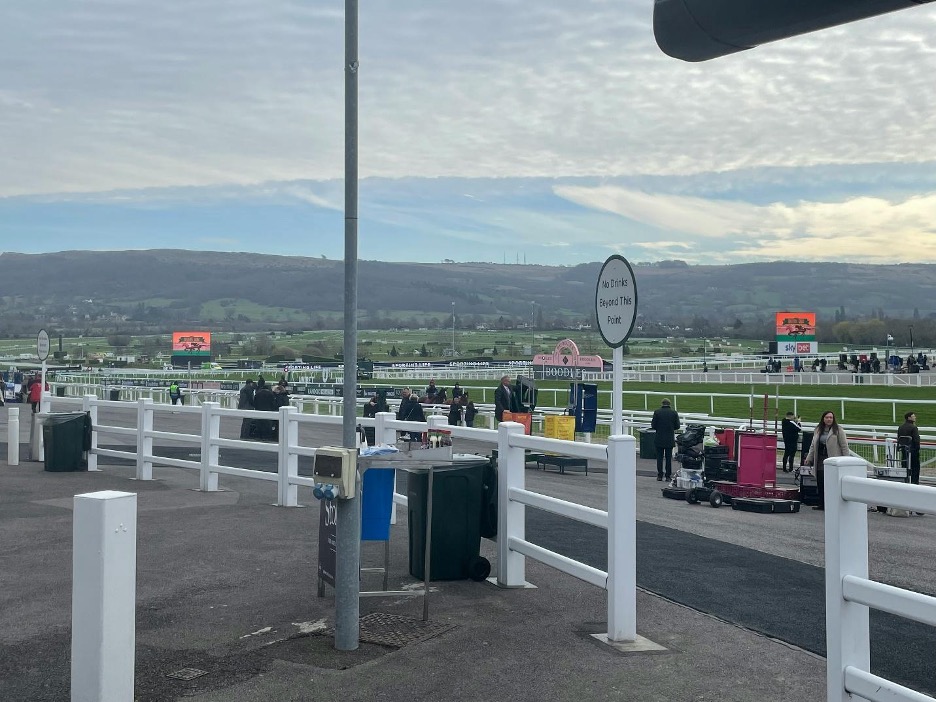
Run on good to soft going on Friday, March 13, the 2026 Cheltenham Gold Cup featured just 10 runners, but granted that the field included the defending champion, Inothewayurthinkin, three of the first four home in the King George VI Chase, The Jukebox Man, Gaelic Warrior and Jango Baie, and the Welsh Grand National winner, Haiti Couleurs, can probably be considered an above-average renewal. At the ‘off’, Gaelic Warrior and Jango Baie shared favouritism at 11/4, just ahead of The Jukebox Man at 7/2, with Haiti Couleurs at 6/1 and 11/1 bar that quartet.

A failure on his only previous attempt in Grade 1 company, in the Betfair Chase at Haydock in November 2025, Haiti Couleurs once again ran inexplicably badly, weakening quickly once headed approaching two out and being pulled up before the final fence. The Jukebox Man likewise dropped away turning into the straight, having reportedly made a respiratory noise, and eventually finished eighth of the nine finishers, over 30 lengths behind the winner.

That winner was, in fact, Gaelic Warrior, trained by Willie Mullins and ridden by his stable jockey, Paul Townend, who were combining for their fifth win in the race after Al Boum Photo (2019 and 2020) and Galopin Des Champs (2023 and 2024). Thus, Mullins moved alongside Tom Dreaper as the most successful trainer in the history of the Cheltenham Gold Cup and Townend moved ahead of Pat Taaffe as the most successful jockey.

Despite racing over a distance beyond an extended three miles for the first time, Gaelic Warrior was always travelling strongly and, having moved to the head of affairs approaching two out, only had to be pushed out on the run-in. He eventually passed the post eight lengths ahead of his nearest pursuer, Jango Baie, who proved no match for the winner in the closing stages, but still finished two lengths ahead of Inothewayurthinkin, who lacked fluency in his jumping, but stayed on strongly to finish third. Reflecting on his record-breaking triumph, winning jockey Townend said, “It’s the Gold Cup. They just get better and better. I am speechless.”

The Vibe of Lights: Why Casinos Feel Special After Midnight?

Step into a casino after midnight and the atmosphere shifts in a subtle but powerful way. The space feels detached from real time, almost like a parallel environment where normal rules fade. This effect is not accidental but carefully engineered.

Designers build casinos to blur the sense of time and amplify focus on the present moment. The deeper into the night you go, the stronger that illusion becomes.

Light, Sound, and the Illusion of Time

Casinos are famously windowless, and that choice is strategic. Without natural light cues, your brain struggles to track time, which weakens your internal clock and stretches your perception of how long you have been playing.

This same sensory control appears in digital environments too, where users move between formats like sports betting India and physical venues without a clear break in rhythm. The continuity keeps attention locked in, regardless of the setting.

The environment is shaped through multiple layers:

  • Warm, low lighting that avoids harsh contrasts and reduces fatigue signals
  • Continuous ambient sound that masks silence and prevents awareness of time passing
  • Repetitive visual cues from screens and slot machines that create a steady mental loop
  • Layout designs that remove straight paths, encouraging wandering instead of exits

Together, these elements form a closed sensory system. You are not just inside a building, you are inside a controlled experience.

That is why midnight often feels like the peak moment. Your brain is already slightly tired, and the environment fills in the gaps with stimulation.

Crowd Energy After Dark

The people inside casinos change as the night deepens. Early evening visitors are often casual, but after midnight the mix shifts toward tourists, night owls, and players willing to stay longer.

Fatigue plays a quiet role here. When people are tired, they process risk differently and react more emotionally to wins and losses. This is part of what drives the intensity around late-night jackpots and group excitement.

Social energy also rises. Small wins feel bigger when shared, and losses are easier to dismiss in a lively crowd. According to research summarized in the psychology of problem gambling, environmental and emotional factors can significantly influence decision-making during play.

Smart Atmospheres and Adaptive Tech

By 2026, casinos are moving beyond static design into responsive environments. Sensors track movement, noise levels, and even player behavior to adjust lighting and sound in real time.

In some venues, systems subtly brighten areas with more activity or shift music tempo based on crowd density. This creates a dynamic atmosphere that feels alive rather than fixed.

The same behavioral logic is mirrored in mobile experiences, where tools like an indian cricket betting app adapt interfaces to user habits and timing. While the format differs, the goal remains consistent: maintain engagement through personalization.

This evolution is especially visible in Asian markets. As noted in this Macau casino case study, operators are investing heavily in smart tables and data-driven design to refine how players interact with the space.

When Time Slips Away

The most important factor behind the midnight effect is time distortion. Without clear signals, hours compress into what feels like a short stretch.

This can lead to a few common patterns:

  • Longer sessions than originally planned
  • Faster decision-making with less reflection
  • Increased spending tied to emotional reactions rather than strategy

These effects do not mean the experience is negative. They explain why it feels so immersive and why it is easy to lose track of limits.

Understanding this design helps you stay aware. Midnight in a casino can feel electric and memorable, but it also demands a bit more attention to your own state of mind.

The Most Exciting Two Minutes: Kentucky Derby Betting Trends and Historical Stats

A racehorse in training The 152nd Kentucky Derby will be held on the 2nd of May 2026. While the jockeys are preparing for this momentous race, punters are preparing their betting strategies. Some are betting on the fan favourite Commandment, while others hope Danon Bourbon will secure the first Kentucky Derby win for a Japanese horse. Read on to learn about the various picks and some important trends.

Expert Picks

Many of the top experts have already prepared their picks for the race. For example, SportsLine’s horse racing expert Jody Demling has picked Fulleffort to win, despite the horse being an underdog starting at post 20.

Meanwhile, he believes Chief Wallabee will lose, as the horse has placed worse in every subsequent race it has appeared in. The current odds for all the horses, according to Demling, are:

  • Renegade: 9-2
  • Albus: 40-1
  • Intrepido: 50-1
  • Litmus Test: 30-1
  • Right to Party: 50-1
  • Commandment: 6-1
  • Danon Bourbon: 50-1
  • So Happy: 15-1
  • The Puma: 10-1
  • Wonder Dean: 25-1
  • Incredibolt: 25-1
  • Chief Wallabee: 10-1
  • Silent Tactic: 30-1
  • Potente: 15-1
  • Emerging Market: 20-1
  • Pavlovian: 40-1
  • Six Speed: 40-1
  • Further Ado: 5-1
  • Golden Tempo: 30-1
  • Fulleffort: 20-1

While these are just Demling’s predictions, he has correctly predicted the winner of the Kentucky Oaks and Derby twelve times in the last 17 years. Meanwhile, other experts are betting on Commandment to win, as he has not lost since his win in Louisville in November 2025.

However, it’s always important to check out the latest Kentucky Derby betting tips for any updates and news on the horses. If a horse withdraws, it can be replaced with one of the other eligible horses like Great White, Ocelli, Robusta and Corona de Oro.

Road to the Derby

When making Kentucky Derby betting predictions, it’s also important to check the horse’s history, as previous races could offer a hint at its performance. Aside from finishing worse in each subsequent race, Chief Wallabee has also seen its Beyer Speed figures fall from 133 to 121, which may be a sign of poor performance. Meanwhile, Fulleffort won the Jeff Ruby Steaks in March. A few key points for some of the horses include:

  • Renegade won the Sam F. Davis and Arkansas Derby races.
  • Emerging Market ran four furlongs in 48.4 seconds at Payson Park.
  • So Happy is partnered with Hall of Famer Mike Smith.
  • Commandment leads the Road to the Kentucky Derby leaderboard with 150 points.

Many of the horses have shown strong performance in their Road to Kentucky Derby races. Danon Bourbon has become popular after a tough race in the Fukuryu Stakes, where he had to beat Don Erectus. Currently, all participants have arrived and are completing their final training sessions before the big race.

Kentucky Derby Trends

While each horse has its own achievements, it’s also important to consider the trends surrounding the Kentucky Derby. For example, 20% of the horses in this year’s race have not had a start as two-year-olds. While people used to think such horses couldn’t win the Derby, that changed when Justify won the Derby in 2018. A few other important trends include:

  • Late runners generally have a disadvantage in the race.
  • The Santa Anita Derby and Florida Derby are considered the best prep races.
  • Horses who ran the last three-eighths of a mile in their final prep races in 38 seconds or less usually have a higher chance at winning.
  • Horses that finish fourth or better in their last prep race usually have a higher chance of winning.

Based on these trends alone, it’s clear why Commandment is a popular pick for Kentucky Derby betting. His last race was the Florida Derby, where he ran the last three-eighths of a mile in 36 seconds, and he has raced three times this year.

However, as the results of the Cheltenham Festival in 2026 show, underdogs can pull a surprise win. Many are hoping Danon Bourbon could be the first international horse to win the Derby.

Post Positions

Interestingly, post positions can sometimes be important in Kentucky Derby betting. For example, post 17 has never produced a Derby winner and the last time a horse from that post got close was Forty Niner in 1988.

Meanwhile, post 1 can be a challenge, as breaking out from the innermost post and the crowd is difficult. Here is a breakdown of each post’s chances of producing a winner:

  • 1: 8.3%
  • 2: 7.3%
  • 3: 6.3%
  • 4: 5.2%
  • 5: 10.4%
  • 6: 2.1%
  • 7: 8.4%
  • 8: 9.5%
  • 9: 4.3%
  • 10: 10.1%
  • 11: 2.1%
  • 12: 3.7%
  • 13: 6.3%
  • 14: 2.9%
  • 15: 9.4%
  • 16: 9.4%
  • 17: 0%
  • 18: 5.3%
  • 19: 3.1%
  • 20: 10.5%

Going purely by post positions, Fulleffort, Wonder Dean, and Right to Party might have the best chance of winning. Last year’s winner, Sovereignty, started from post 16, but post 20 has the highest historical win rate because horses from that post can sometimes run a shorter distance. However, if the horse doesn’t break out quickly enough, it may struggle to catch the runners on the inside.

Weather Report

One of the most unpredictable aspects of the race is the weather. Rain could significantly alter track conditions, potentially changing the winner. Fulleffort has experience on turf and synthetic surfaces, so a dirt track may prove challenging, while Commandment has experience with this type of track. Current weather forecasts for Louisville are:

  • 15°C
  • 16% chance of precipitation
  • 45% cloud cover
  • wind gusts of 28 km/h

While the weather on Friday will be rainy, which is an issue for the Kentucky Oaks, the current Derby forecast calls for dry, cool, partly sunny weather. However, historical data suggests a 48% chance of rain, so punters should be ready to adjust their Kentucky Derby betting strategies. Last year’s weather created sloppy conditions, which allowed Sovereignty to beat the favourite Journalism.

Conclusion

Keeping track of the horses and the track’s conditions is the best way to ensure you have a solid strategy. However, there’s always a chance the underdog can pull off a surprising victory, so it’s worth sticking with your favourite after considering all the factors. Remember to gamble responsibly and contact organisations like the Kentucky Council on Problem Gambling if you need professional help.


Footballers and Managers Who Own Successful Racehorses

At this years’ Cheltenham Festival, there was no shortage of VIPs, ranging from famous music artists to former footballers. Celebrities are a regular presence at the big events but many have taken their passion for spectating at races to the next level by owning their own racehorse.


Not surprisingly, there is a long list of former footballers and managers who have taken the leap. With the means to make large investments and a long interest in competitive sport, footballers and horse racing is a fairly natural cross-over.


These are some of the most famous racehorse owners from the football world:


Sir Alex Ferguson


Former Manchester United manager, Sir Alex Ferguson’s passion for horse racing turned into ownership back in 1998, when he invested in Queensland Star. It is reported that his interest in ownership stemmed from a visit to the Cheltenham Festival a few years previous. Queensland Star went on to have a good set of runs, winning two races, including a win in the first outing at Newmarket.


Sir Alex has since acquired multiple racehorses, including Spirit Dancer and Rock of Gibraltar, with Spirit Dancer proving to be almost as successful as his Class of ’92 team, winning the $1 million Bahrain International Trophy.


Michael Owen

As a young player breaking into the Liverpool and England teams, Michael Owen was renowned for his lightning pace. His World Cup goal against Argentina at just age 18, was one of the most memorable moments in the tournament and was the start of an exciting career.


With this year’s World Cup just around the corner, there is a lot of hype around young players like Lamine Yamal, and for those who like a flutter on the football, you can find competitive odds for the World Cup 2026 on sportsbooks listed on https://www.kasinonetti.com/vedonlyonti/jalkapallon-mm/.


Michael Owen is a regular at race meets, and he runs the Michael Owen Racing Club, with his most successful being Brown Panther who claimed a win at Royal Ascot.


Wayne Rooney

Rooney was another player who rose to footballing fame in his early years, earning a big move to Manchester United after an impressive start at Everton. Just like his former manager Sir Alex and former team mate Owen, Rooney invested in horses, with his most well-known racehorse being Announcement, whom he part-owns with some of his former United team mates.


Ian Wright

Former Arsenal striker Ian Wright is another big name footballer who owns racehorses, with the aptly named Born to Finish securing several memorable wins, including one at Kempton. Now working as a pundit, Wright has made several appearances in front of the camera at race meets, interviewing winning jockeys, owners and trainers.


These are just a few of the most famous people from the football industry who own horses but there are many more like Harry Redknapp, Thomas Muller and Sergio Ramos, proving there is a strong link between a love of football and a passion for horseracing.

Top 5 Most Influential Jockeys Of All Time

Horse racing has been a popular sport in the UK for centuries, captivating the imaginations of millions worldwide. From passionate fans to casual spectators and the unforgettable jockeys that make all of this happen. Skilled riders guide their horses through difficult race courses, often making split-second decisions that can change the overall outcome of a race, which is a key factor to consider when racing betting. And over the years, certain jockeys have stood out more than others; their talent, determination, and influence have helped shape horse racing into what it is today. In this post, we will look at the top 5 most influential jockeys of all time.

Sir Gordan Richards

The first name that comes to mind when discussing the most influential jockeys is Sir Gordon Richards. Born in 1904, Richards is widely regarded as one of the greatest jockeys in British history. He started riding horses from a very young age and quickly showed his potential talent. Richards held an incredible winning streak, and he was able to get over 4000 victories in his career, which still stands as a testament. Richards stood out not just for his skill but also for his professionalism and dedication to the sport.


His influence extended beyond his wins: he set a high standard for future jockeys and helped popularise horse racing as a legitimate profession, and Richards was the first jockey to be knighted. This is a rare honour that reflects his importance to British sport. His career spanned more than three decades, and even after he retired, his legacy inspired many younger riders to pursue their dreams.

Lester Piggot

Lestor Piggott is a name that many racing fans still hold in high regard, widely known as one of the greatest ever to do it. Born in 1935, Piggott’s career was marked by his exceptional talent and his charismatic personality. He began riding as a young boy and quickly gained fame for his natural ability to judge a race. Over his lifetime, he won numerous major races, including the prestigious Epsom Derby nine times. And his style was unique, known for his smooth riding technique and his ability, similar to Richards’, to stay calm when it mattered most.


Piggott’s influence went beyond just his victories, as he helped raise the profile of jockeys as skilled athletes and sportspersons. In terms of Piggot’s characteristics, he became a household name early in his career due to his charisma, which made him a household name, attracting more people to watch the sport. Despite facing some controversies during his career, Piggott’s impact on the sport remains undeniable.

Fred Archer

Frederick James Archer, also known as (The Tin Man), was born in the Victorian era (1857). And even though his victories were a long time ago, that doesn’t change his title of being one of the most significant figures in the history of British horse racing. He was born in 1861 in Cheltenham, to the second son of jockey William Archer.


The talent was clear early on, with Archer establishing himself as a top rider and gaining widespread respect for his exceptional ability and elite approach to racing. Through the course of his racing career, Archer secured many victories, over 2700 to be precise, including four wins in the legendary Derby, solidifying his status as one of the finest jockeys of his time. Archer’s elegant riding style set him apart from the rest, complemented by his ability to read races accurately and execute perfectly timed moves.


Fred Archer’s influence on the sport was significant because he helped elevate the status of jockeys and demonstrated the importance of skill and tactics in racing. Sadly, Archer’s life was cut short when he died at the age of 29, but his legacy lived on. Many jockeys and rainers looked up to him as a pioneer who set new standards of excellence. His story remains inspiring for those who love horse racing and aspire to be as good as Fred Archer.

Willie Carson

The influence that Willie Carson has was being a top-tier jockey from Scotland, born in 1942, he stands out as one of the most successful riders of the 20th century. And throughout his career, he achieved victories in some of the world’s most renowned races, including multiple wins at the Epsom Derby and Ascot Gold Cup. Known for his strong work ethic and ability to perform under pressure, Carson was regarded as a versatile rider capable of adapting to various horses and racing conditions.


In addition to his personal accomplishments, Carson played a key role in modernising the sport by emphasising the importance of fitness and training. Carson was a big advocate for professionalism in horse racing, with an approachable demeanour that earned him popularity among fans and peers. He served as an inspiration to young riders to pursue excellence, and his influence helped elevate the sport’s profile.

Kieren Fallon

One of the most influential jockeys is Kieren Fallon, who was born in Ireland in 1965 and is widely remembered as a stable jockey for Henry Cecil. Making a major impact on horse racing both in the United Kingdom and internationally. Fallon was remembered for his competitive drive and for securing wins in numerous major races across Europe. The clever riding style he used often enabled him to execute clever moves during races that gave him a competitive edge.


Beyond his achievements on the track, he became a role model for perseverance and resilience. Even though Fallon faced setbacks, his career showed that success in horse racing relies not only on physical strength but also on quick decision-making and mental strength.

Summary

These five jockeys have all significantly shaped the history of horse racing with their achievements and influence. not only having elevated the sport’s prestige but also inspired countless others to pursue their dreams on the racecourse. Their stories remind us that behind every thrilling race are riders driven by passion, skill, and unwavering dedication.

1 2 3 4 5 28