Bulgarian casinos in the European market
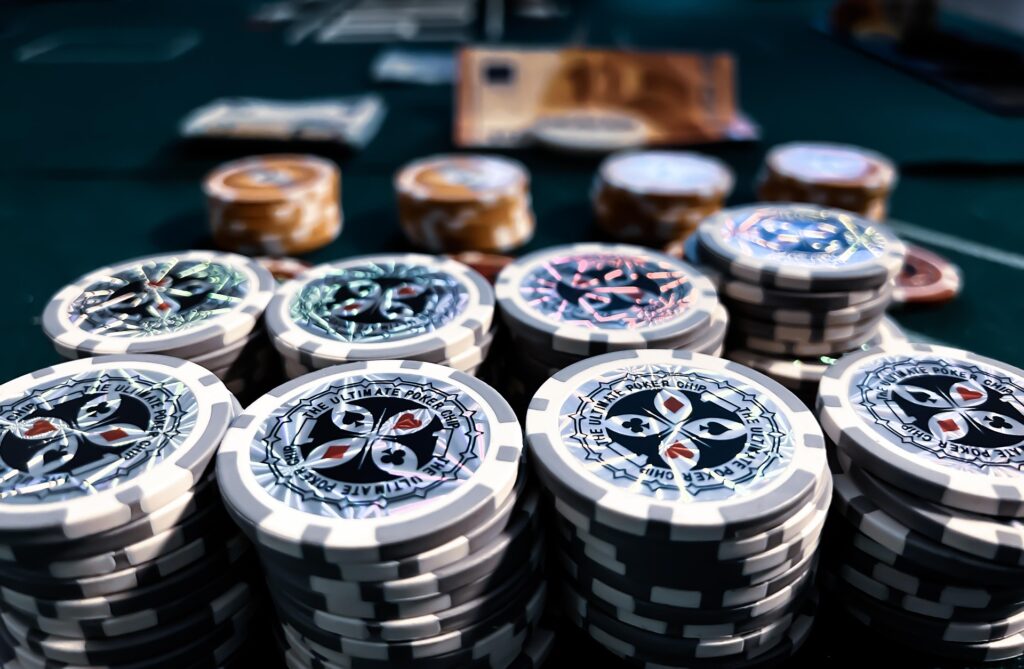
Bulgarian casinos, most of which are featured on the website бг-казино.бг, play an important role in the European gambling industry, combining traditional approaches with modern technology. Legal operators offer a wide range of games, from classic slots and roulette to poker and lotteries, whilst regulated operating conditions boost user confidence and contribute to market stability. Openness to foreign partners and compliance with EU standards make Bulgaria an attractive platform for integration into the international gambling industry.

Regulation and security

Bulgaria is actively adapting its legislation to European Union standards, ensuring transparent rules for operators and player protection. Licensed casinos are required to verify users’ age and identity, and to implement risk control mechanisms and measures to prevent problem gambling. Compliance with these rules helps create a competitive environment, raises safety standards and reduces the risk of fraud.

The introduction of modern technologies plays a key role: online platforms offer instant payouts, mobile apps and interactive interfaces, making gaming more convenient and secure. Regulators also promote transparency in financial flows and adherence to ethical standards in marketing campaigns.

Innovation and marketing approaches

Bulgarian operators are actively implementing new strategies to retain and expand their audience. Among the most common practices are:

  • Loyalty programmes for regular players with bonuses and special offers.
  • Affiliate programmes and collaborations with European platforms to expand the market.
  • Active promotion via social media, email marketing and content campaigns.
  • Organisation of special events and VIP services in land-based casinos for a premium audience.

These approaches allow for the combination of the traditional gaming experience with modern digital solutions, which increases user satisfaction and trust in brands.

Interaction with the European market

Bulgarian casinos actively participate in international exhibitions, conferences and professional associations, enabling the exchange of experience and the implementation of best practices. The integration of advanced risk management systems, analysis of player behaviour and the implementation of anti-fraud solutions ensure high-quality services.

The popularity of Bulgarian operators in the European market is confirmed by the growth in the number of online transactions, land-based casino footfall and user trust levels. In the future, an expansion into new markets, the introduction of innovative gaming formats and a further improvement in service standards are expected, which will make Bulgaria a key player in the European gambling industry.
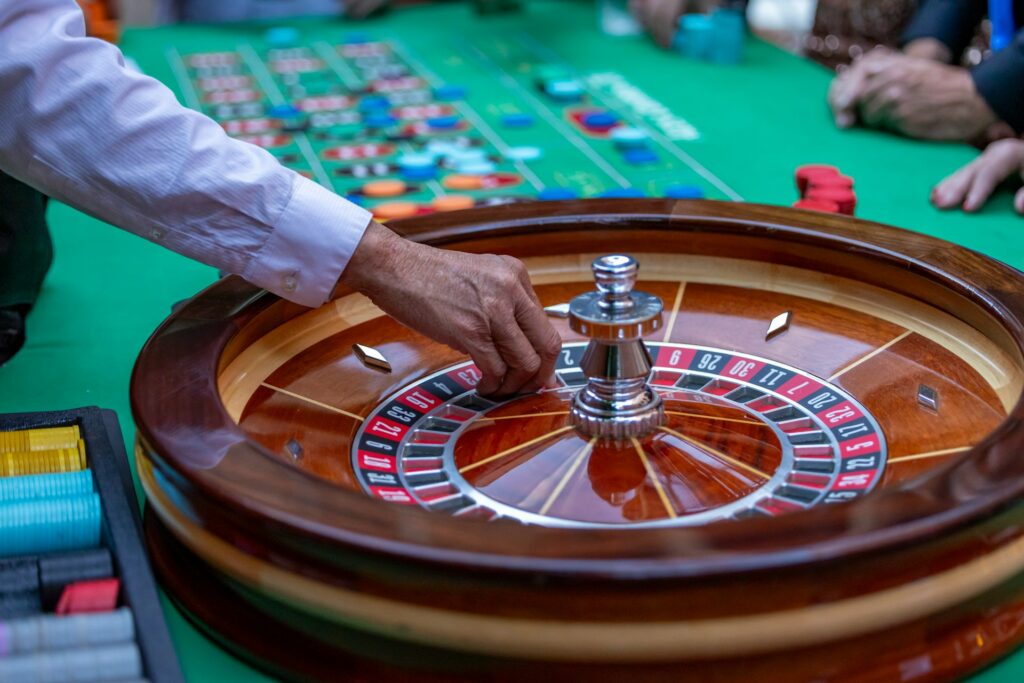
 

Roulette Strategies That Players Still Swear By

Roulette looks simple, but its betting systems are mostly about structure and control. The math does not change, yet patterns can shape how you manage risk, pace your bankroll and handle losing streaks.
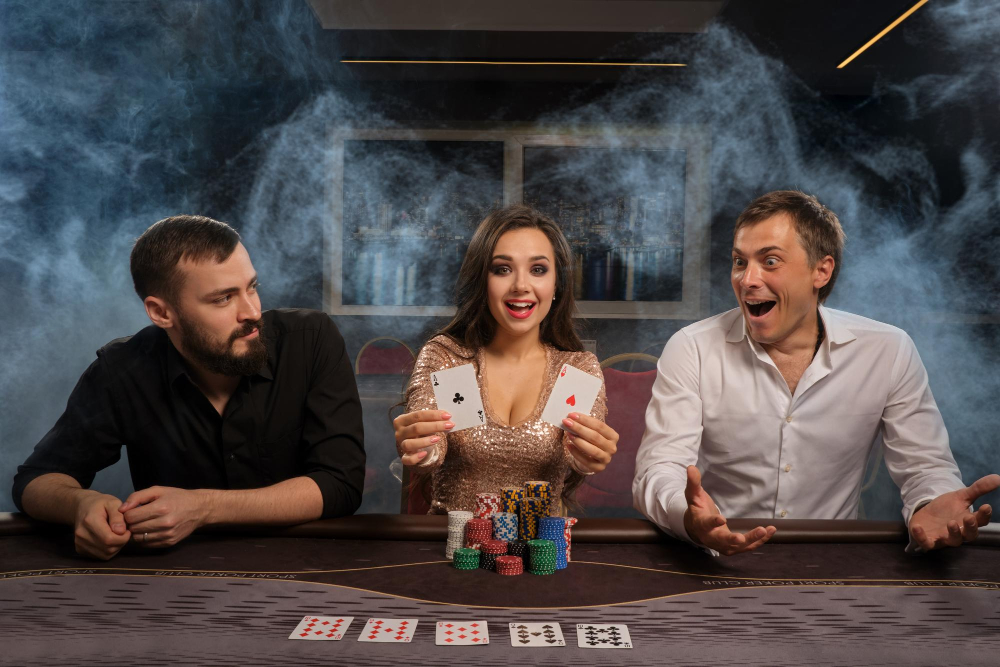
Progression Systems and Bankroll Discipline

Most popular roulette systems fall into two groups: progressions and flat betting. Progressions adjust your stake after each spin, while flat betting keeps it constant. Both can be used at a traditional table or in online environments such as 1red, where players manage their own pace.

Whatever the setting, the underlying wheel still has a fixed house edge. On a European layout that edge is about 2.7 percent, because payouts are based on slightly worse odds than the true probability of each outcome. No staking pattern changes that long-term expectation, but it does shape variance and short-term results.

Choosing a strategy is therefore less about “beating” the game and more about deciding how you want risk and swings to feel over a session.

Martingale: Double After Every Loss

The Martingale system is the classic example of a negative progression. You start with a base unit on an even‑money bet, such as red or black, and double your stake every time you lose. One win recovers all previous losses plus one unit of profit, which makes the logic very appealing.

The catch sits in the numbers. Long losing streaks are rare but not impossible, and doubling quickly sends stakes into uncomfortable territory. Table limits and finite bankrolls stop the sequence before the “inevitable” win arrives, which is exactly where big drawdowns occur.

In terms of expected value, every spin still has the same negative edge as a flat bet. Martingale compresses many small wins and a few very large losses into the same overall curve.

Fibonacci and Gentler Progressions

Some players prefer the Fibonacci sequence as a softer alternative. Stakes follow the familiar 1‑1‑2‑3‑5‑8 pattern, moving one step forward after a loss and two steps back after a win. The idea is to claw back losses more gradually while reducing the risk of explosive bet sizes.

Compared with Martingale, this approach tends to stretch a bankroll further, because increases are incremental rather than exponential. It also feels more manageable mentally, which is why many recreational players find it easier to stick with over a full session. The trade‑off is that recovery from deep losing runs can take longer and may never complete before you decide to stop.

Again, the house edge stays untouched. All you are really changing is the shape and timing of wins and losses.

Flat Stakes and Probability Awareness

Fixed‑stake betting looks boring next to progressions, yet it aligns most closely with probability theory. You pick a unit size that fits your bankroll, keep it constant, and let the natural ups and downs of the wheel play out. With this structure, you can clearly see how the house edge slowly eats into results over many spins.

Flat betting also makes it easier to combine basic strategy with simple safeguards, such as:

  • Setting a hard loss limit for the session
  • Pre‑deciding a time cap rather than chasing one more spin
  • Mixing outside and inside bets without changing your stake

These habits support more responsible play because they break the link between emotion and bet size. When you are not increasing stakes after a loss, it is easier to step away on your own terms.

Why Players Still Use These Systems

Roulette remains one of the clearest examples of how the house edge works, yet progression systems continue to attract dedicated followers. Part of the appeal is narrative: streaks, recoveries and “one more spin” moments feel exciting when framed inside a plan. Systems give players a sense of structure in a game defined by randomness.

The key is to treat these strategies as ways of organizing your session, not as tools to overturn the math. If you understand the limits of Martingale, Fibonacci or flat stakes, you can choose the one that fits your risk tolerance and keep the experience enjoyable instead of stressful.

2027 Cheltenham Festival Preview

The 2027 Cheltenham Festival is scheduled to take place between Tuesday, March 16 and Friday, March 19 and will, as is customary these days, will consist of 28 races, seven on each day. The four ‘feature’ races of the week, the Champion Hurdle, Queen Mother Champion Chase, Ryanair Chase and Cheltenham Gold Cup are scheduled for 16:00 on each day.

At the 2026 Cheltenham Festival, the annual competition between British and Irish trainers, the Prestbury Cup, went down to the very last race, with Ireland eventually winning 15-13. British trainers will, no doubt, be keen to improve on their best performance at the March showpiece since the 14-14 tie in 2019, but will inevitably face a potent challenge from across the Irish Sea, not least from the most successful trainer in the history of the Cheltenham Festival, Willie Mullins.

Leading trainer at the Festival for the last eight years running, with a record 10 winners over the four days in both 2022 and 2025, Mullins won the Champion Hurdle with Lossiemouth, the Queen Mother Champion Chase with Il Etait Temps and the Cheltenham Gold Cup with Gaelic Warrior. It is no surprise to see all three reigning champions at the head of the early ante-post lists for their respective races in 2027, while other early, Mullins-trained favourites include Even Tho in the Turner Novices’ Hurdle, King Rasko Grey in the Brown Advisory Novices’ Chase and Fact To File in the Ryanair Chase.

For the home team, the twice-raced French import Feel Gut, trained by Nicky Henderson, heads a wide-open ante-post market for the Supreme Novices’ Hurdle, while stable companion Old Park Star, who won that race in 2025, is currently the only horse available at single-figure odds for the Arkle Challenge Cup. Later in the week, another French import, Mets Ta Ceinture, trained by Dan Skelton, who finished runner-up in the Weatherbys Champion Bumper at the 2026 Cheltenham Festival, is already a short-priced favourite for the opening race on St. Patrick’s Thursday, the Ryanair Mares’ Novices’ Hurdle. Two-time Festival winner, and defending champion, Wodhooh, trained by Gordon Elliott, likewise heads the market for the Close Brothers Mares’ Hurdle later same day.

Cheltenham Racecourse

The earliest records of horse racing in the vicinity of Cheltenham, including at Prestbury Park, the present home of Cheltenham Racecourse, date back to the first half of the nineteenth century. However, it was not until 1911 that Cheltenham Racecourse became the permanent home of the Grand Annual Chase, inaugurated at nearby Andoversford in 1834, and so began its evolution as the home of National Hunt racing.

Situated a short distance north of Cheltenham town centre, Prestbury Park is a natural amphitheatre in the foothills of the Cotswolds and, nowadays, home to two main courses, the Old Course and the New Course, both of which are left-handed and undulating and run side-by-side for much of the way. Despite its name, the New Course is only relatively new, having been used for the first time in 1967. A much more recent addition to the Prestbury Park venue was the Cross-Country Course, the only one of its kind in Britain, consisting of a series of unusual obstacles, including banks, mounds and rails, opened in 1995.

Cheltenham Racecourse is best known as the home of the ‘Olympics of horse racing’, the Cheltenham Festival, which, nowadays, is staged anually over four days, Tuesday to Friday, in mid-March, and features 28 races, including championship events in each and every discipline of National Hunt racing. The Cheltenham Festival was first staged, over two days, in 1911, extended to three days in 1923 – the year before the inugural Cheltenham Gold Cup, as a steeplechase – and, again, to four days in 2005. Offering in excess of £5 million in total prize money, the modern Festival attracts over 250,000 spectators over the four days. The ‘Blue Riband’ event of the week, the Cheltenham Gold Cup, run on the final day, is currently worth over £350,000 to winning connections.

The Vibe of Lights: Why Casinos Feel Special After Midnight?

Step into a casino after midnight and the atmosphere shifts in a subtle but powerful way. The space feels detached from real time, almost like a parallel environment where normal rules fade. This effect is not accidental but carefully engineered.

Designers build casinos to blur the sense of time and amplify focus on the present moment. The deeper into the night you go, the stronger that illusion becomes.

Light, Sound, and the Illusion of Time

Casinos are famously windowless, and that choice is strategic. Without natural light cues, your brain struggles to track time, which weakens your internal clock and stretches your perception of how long you have been playing.

This same sensory control appears in digital environments too, where users move between formats like sports betting India and physical venues without a clear break in rhythm. The continuity keeps attention locked in, regardless of the setting.

The environment is shaped through multiple layers:

  • Warm, low lighting that avoids harsh contrasts and reduces fatigue signals
  • Continuous ambient sound that masks silence and prevents awareness of time passing
  • Repetitive visual cues from screens and slot machines that create a steady mental loop
  • Layout designs that remove straight paths, encouraging wandering instead of exits

Together, these elements form a closed sensory system. You are not just inside a building, you are inside a controlled experience.

That is why midnight often feels like the peak moment. Your brain is already slightly tired, and the environment fills in the gaps with stimulation.

Crowd Energy After Dark

The people inside casinos change as the night deepens. Early evening visitors are often casual, but after midnight the mix shifts toward tourists, night owls, and players willing to stay longer.

Fatigue plays a quiet role here. When people are tired, they process risk differently and react more emotionally to wins and losses. This is part of what drives the intensity around late-night jackpots and group excitement.

Social energy also rises. Small wins feel bigger when shared, and losses are easier to dismiss in a lively crowd. According to research summarized in the psychology of problem gambling, environmental and emotional factors can significantly influence decision-making during play.

Smart Atmospheres and Adaptive Tech

By 2026, casinos are moving beyond static design into responsive environments. Sensors track movement, noise levels, and even player behavior to adjust lighting and sound in real time.

In some venues, systems subtly brighten areas with more activity or shift music tempo based on crowd density. This creates a dynamic atmosphere that feels alive rather than fixed.

The same behavioral logic is mirrored in mobile experiences, where tools like an indian cricket betting app adapt interfaces to user habits and timing. While the format differs, the goal remains consistent: maintain engagement through personalization.

This evolution is especially visible in Asian markets. As noted in this Macau casino case study, operators are investing heavily in smart tables and data-driven design to refine how players interact with the space.

When Time Slips Away

The most important factor behind the midnight effect is time distortion. Without clear signals, hours compress into what feels like a short stretch.

This can lead to a few common patterns:

  • Longer sessions than originally planned
  • Faster decision-making with less reflection
  • Increased spending tied to emotional reactions rather than strategy

These effects do not mean the experience is negative. They explain why it feels so immersive and why it is easy to lose track of limits.

Understanding this design helps you stay aware. Midnight in a casino can feel electric and memorable, but it also demands a bit more attention to your own state of mind.

1 2 3 4 5 6 8